Means of Egress
Design and systems work for a 1 to 8 player co-op extraction horror game in Unity, built around a hidden stability value that walks each run from a liminal dream into something much worse.
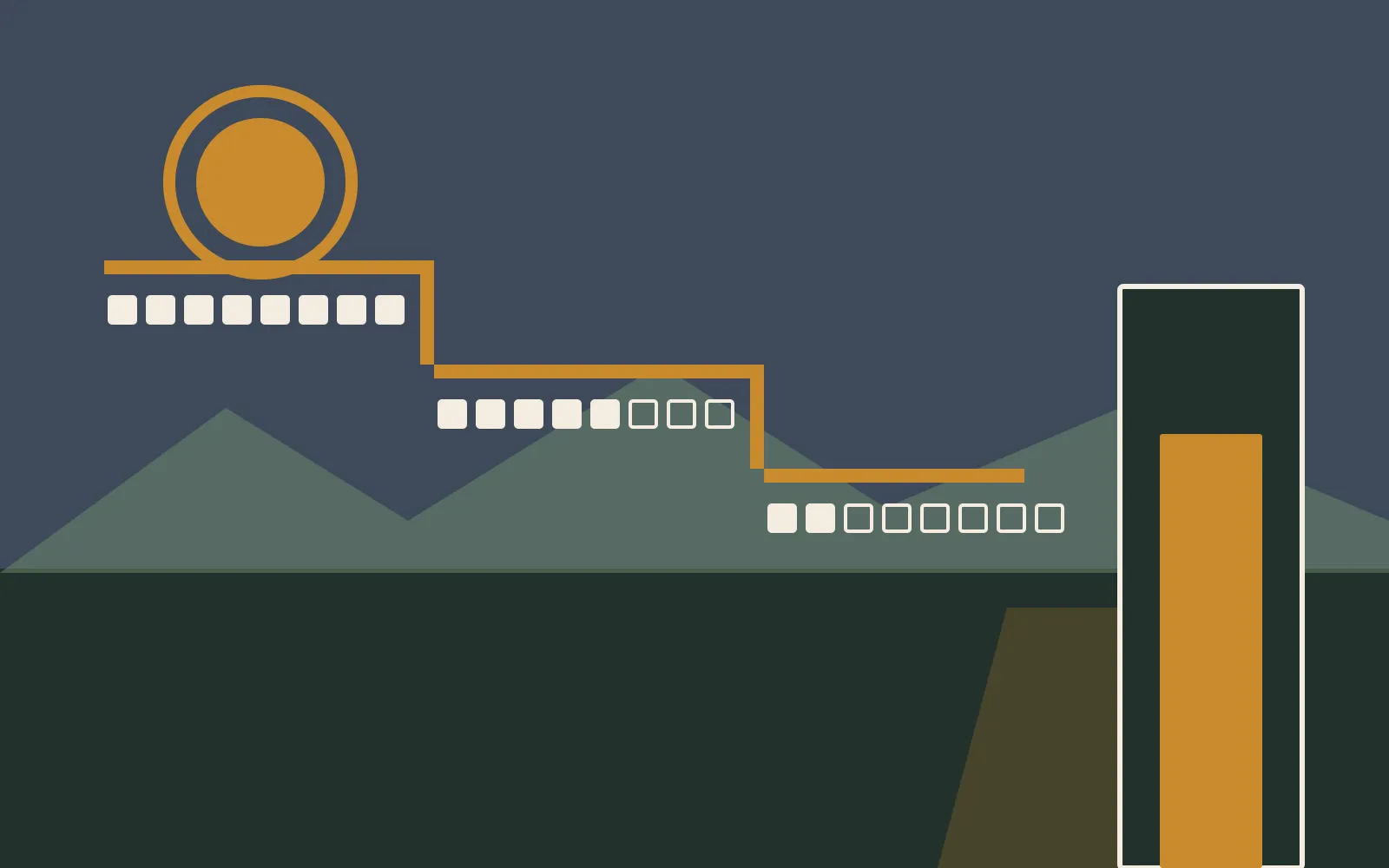
A co-op first-person extraction horror game for 1–8 players, headed for PC via Steam Early Access. You go down into liminal dream locations, pick up what you came for, and try to get out before the dream stops being neutral about you.
The core idea
Every run is governed by a stability value the player never sees directly. It decays as the team lingers, takes risks and makes noise. That decay drives a three-act structure, turning a dreamscape you can navigate into one that is actively hostile, and finally into a scramble for the exit. Because the tension curve falls out of the simulation, no two runs come apart the same way.
Systems
The Warden. An ambient presence that advances through four stages as stability falls. The early stages are environmental and deniable, the late ones direct and unsurvivable. I am after dread that builds out of ambiguity rather than a jump scare on a timer.
Perception divergence. Sanity is tracked per player and resolved client side, so teammates genuinely see different things. One player insisting a door was open when it wasn’t counts as a mechanic here rather than a bug. It moves the horror into the voice chat instead of onto the screen, which is where I think it works best.
Roles and characters. Six roles across eighteen characters, each one shaping how a team spreads out its risk and its information.
Meta-progression. A persistent hub with a corruption meter that carries consequences between runs, so what you decide at the exit still matters after you log off.
Scope and status
Currently in pre-production. Design systems are fully specified in a v2.0 design document. Assets and networking aren’t built yet.
The most useful design work so far was a scope rewrite. The original document planned sixteen locations across four content waves, all of it committed to up front. The revision keeps that roadmap but moves delivery onto a much smaller vertical slice, one polished location with a core loop that actually works, and lets the rest grow out of that. Getting the loop right before multiplying it across sixteen maps seems like the likelier route to finishing at all.